Further Back Thank Than We Can Remember
Further Back Than We Remember
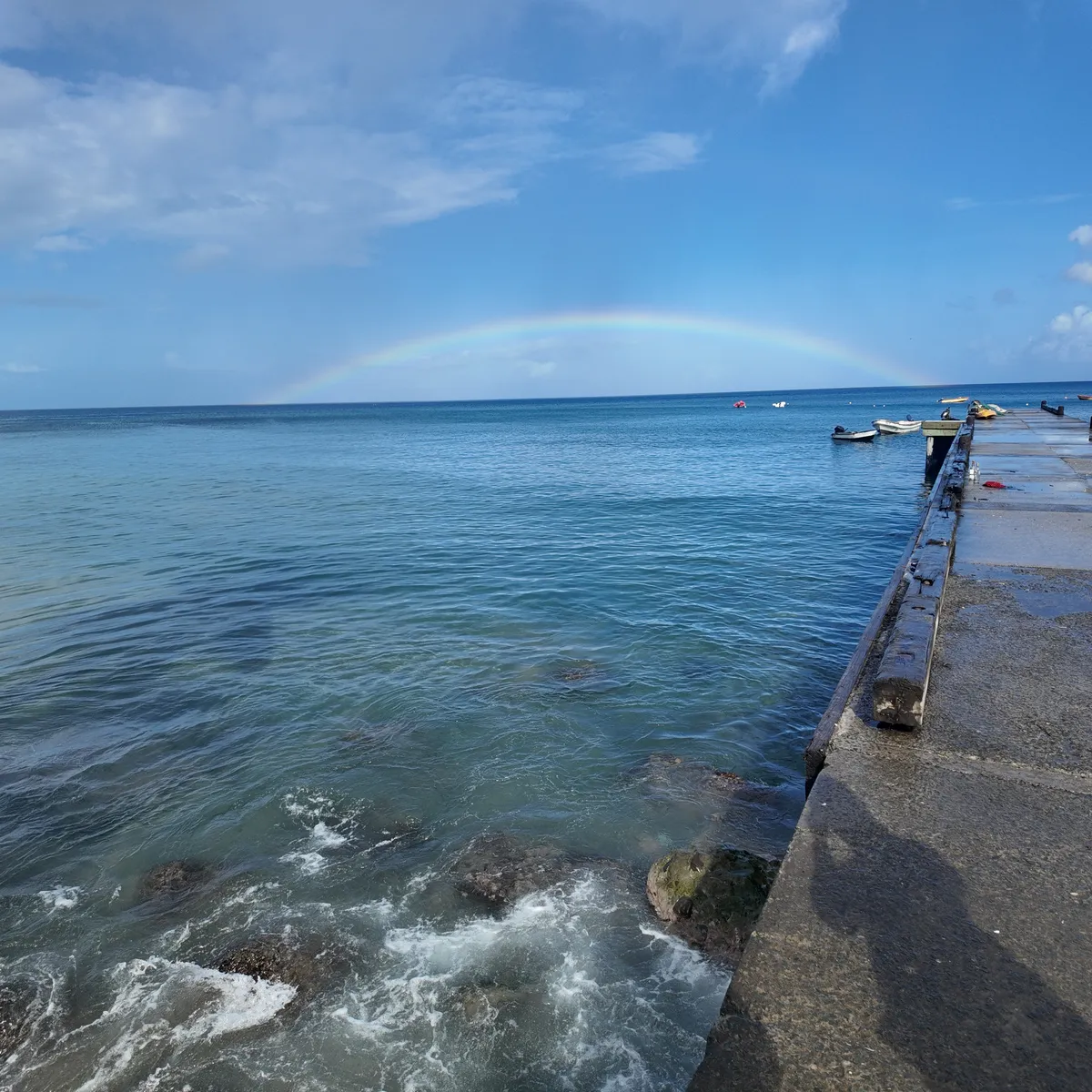
I just got back from St. Lucia leading an immersion with 9 beautiful women. Each experience I curate teaches me something and sets a new standard for what will come next. This time I am thinking about who we are, what we remember and what we choose to embrace can either heal us or make us sick(er).
One day, after we came back from the Creole Day celebration, I was sitting looking at the view over the pool, and my mind just started going.
I was thinking about how excited I was about the food that I ate everything that I could. The bake and cheese paste reminded me of my mother. The flying fish took me right back to trips to Barbados. And I kept thinking about how connected the concept of Creole culture is to St. Lucia, Haiti and Louisiana.
It all feels like family.
In full transparency, I HATE the diaspora wars. It feels like I woke up one day and could no longer identify as Black. I honestly feel like we spend so much energy in the diaspora fighting over who belongs where and whose pain counts more, that we create more division and confusion. But, it has made me think deeper about who I am, the people I come from and what I honor.
Yes, we each have our own history and our own pain, and these experiences of our ancestors create our specific stories. Those differences deserve respect. The wounds we have need to be tended to. Our uniqueness has to have a space to be honored.
But when our differences harden into walls, they cost us. They cut us off from the very people and things that can teach us, support us and help us find community that can carry us forward. Slowly, quietly, they wear down our spirits.
Learning about Creole culture, helped me remember that we survived by living in community with people who were different, but who we could learn from and take aspects of "them" and "us" combine it and create something that could not only sustain in a new place, but also help us to THRIVE.
Sitting by that pool, I thought about my ancestors.
I thought about the ones who were trafficked across many countries because they were rebellious, or because the enslaver wanted to keep them close. I thought about the children who were sold off. Our people were scattered on purpose, and they left pieces of themselves everywhere they landed. They gathered pieces from the people of the land they were in and used it to survive. THIS is where WE come from.
I recently learned that my great-grandmother was Indigenous to Guyana, and I'm still understanding what that means to me. But it made me think about Indigenous people who were enslaved because they looked Black, and about everyone who kept moving from place to place looking for freedom.
We share so much more than we think.
So here's my question. When we talk about ancestral veneration or identity, where do we begin? Where do we stop?
Do we stop at where our people settled? Do we only go as far back as we can remember?
The truth is, as we acknowledge who we belong to, we have to be honest about what we know and what we might not know about our history. There are people in my line whose names I will never learn. Leaving them out of my story just because nobody wrote them down would be its own kind of erasure.
Making room for what we don't know is part of the work. Learning to love, accept and find commonality with others who share our roots must be a part of the process.
That's why experiences like this are so healing. I ask the women who join me: What does your body remember? What does it yearn for? Sometimes it recognizes a taste or a song or simply feels at home some place you've never been before your mind can explain why.
When you allow yourself to just acknowledge what you are yearning for, you make better choices about what you need. You stop forcing yourself into communities and ways of healing that were never built for you, and you start reaching for support that actually fits.
A lot of us are trying to solve our problems with half the equation. We feel restless or disconnected and can't figure out why. So ask yourself: are you cutting yourself off from what you actually need, simply because you haven't allowed yourself to be exposed to it?
Questions to Sit With
Where does your story of belonging begin, and who decided that starting point?
What foods, sounds, or places stir something in you that you can't fully explain?
Which parts of your history do you know, and which parts are you willing to hold as mystery?
What can you acknowledge and lean into even if you have no explanation?
Where might you be keeping yourself from a community, a practice, or a connection you actually need?
The ones who rebelled and the ones who walked toward freedom without knowing where it would lead and the ones who survived until they were set free are all in you, and they still have something to give you.
So this week, I want you to notice what calls you and move you. Cook the food that reminds you of home or that simply feels good, even if you don't know why. Call that cousin. Ask your elders the questions while you still can. Sit with the parts of your story you don't know yet, and let those be sacred too. Even if it makes no sense, DO IT even if you don't know where it will lead.
If you're ready to do this work in community and want to join one of my experiences, click the link here.
With love, Melissa


